
You're Being Groomed
The Subtle Trick People Use to Test Whether They Can Walk All Over You

Welcome to all the new subscribers and followers. Most of you came because of my recent articles about suing the State of California in federal court for trying to shut down my work (I’m known online and in my books as the Crappy Childhood Fairy) which the state claims is the practice of psychology without a license. I vehemently disagree.
Not everything in the realm of human help is “psychology” — nor do we require permission from the government to talk or teach or learn from each other.
Because I grew up in family ground down by alcoholism, poverty, violence and neglect, and because talk therapy (when I could afford) could not seem to touch my struggles, I had to find my own way to survive and put together a proper life. I teach people what I learned — practical tips to calm rattled emotions and janky nervous systems, and the everyday, common-sense-but-countercultural strategies that allowed me to become a functional, strong and honorable person.
In addition to pieces about my lawsuit and the philosophical arguments that animate my resistance to state control of my relationships with students, I’ll be sharing parts of my books and lightly edited transcripts of my videos, that are meant to be useful for people who are working to overcome a traumatic past. The transcript below is from a recent upload to my YouTube channel. Perhaps you’ll find it useful.
Have you ever met someone who seemed so wonderful at first — and then slowly, almost too slowly to notice, they started treating you worse and worse? And by the time you understood what was happening, you were already deep in it. Making excuses for them. Doubting yourself. Wondering if maybe you were the problem.
And then, when you finally tried to push back or set a limit, they acted shocked. Hurt. Offended. As if you were the one being unreasonable.
How did you get there? How does it go from “this person is amazing” to “I think I’m losing my mind”?
I’ll tell you how. You were groomed.
Now, when most people hear that word — “grooming” — they think of predators and children. And yes, that is one very serious form of it. But grooming happens between adults all the time, in friendships, in workplaces, in romantic relationships, in families. And if you grew up with childhood trauma, in a home where your boundaries were never respected, you are a prime target. Not because something is wrong with you but because you didn’t yet learn to step back when someone crossed a line. Nobody helped you understand what a boundary violation feels like in its earliest stages — when it’s still small, when it still looks like nothing at all.
So let me break down what grooming actually is, how to spot it, and what you can do to protect yourself.
Grooming Is a Process, Not a Single Act
At its core, grooming is a sequence. It’s not one thing someone does to you. It’s a series of small things, and each step is a test — to see how much you’ll tolerate, to see whether you’re the kind of person they can eventually control.
And here’s the ugly part: the early steps feel good. They feel like love. Like attention. Like finally someone sees you.
The first stage is what I’d call the shower. They shower you with attention, flattery, interest. They want to know everything about you. They tell you you’re special, you’re different, they’ve never met anyone like you. Mmmm. Delicious.
If you grew up starved for that — invisible, or criticized, or forced to earn every scrap of affection — this feels like water in the desert. You drink it up. Of course you do.
But here’s what’s actually happening underneath. They’re gathering information. What do you care about? What are you insecure about? Where are your soft spots? Because all of that becomes leverage later.
Then Comes the Test
After they’ve built up that warmth and closeness, they do something small. Something just slightly off. Something that crosses a line, but barely.
Maybe they make a joke at your expense in front of other people. Maybe they cancel plans and don’t apologize. Maybe they repeat something you told them in confidence. Maybe they snap at you and then act as if nothing happened.
This is the test. They are watching to see what you’ll do.
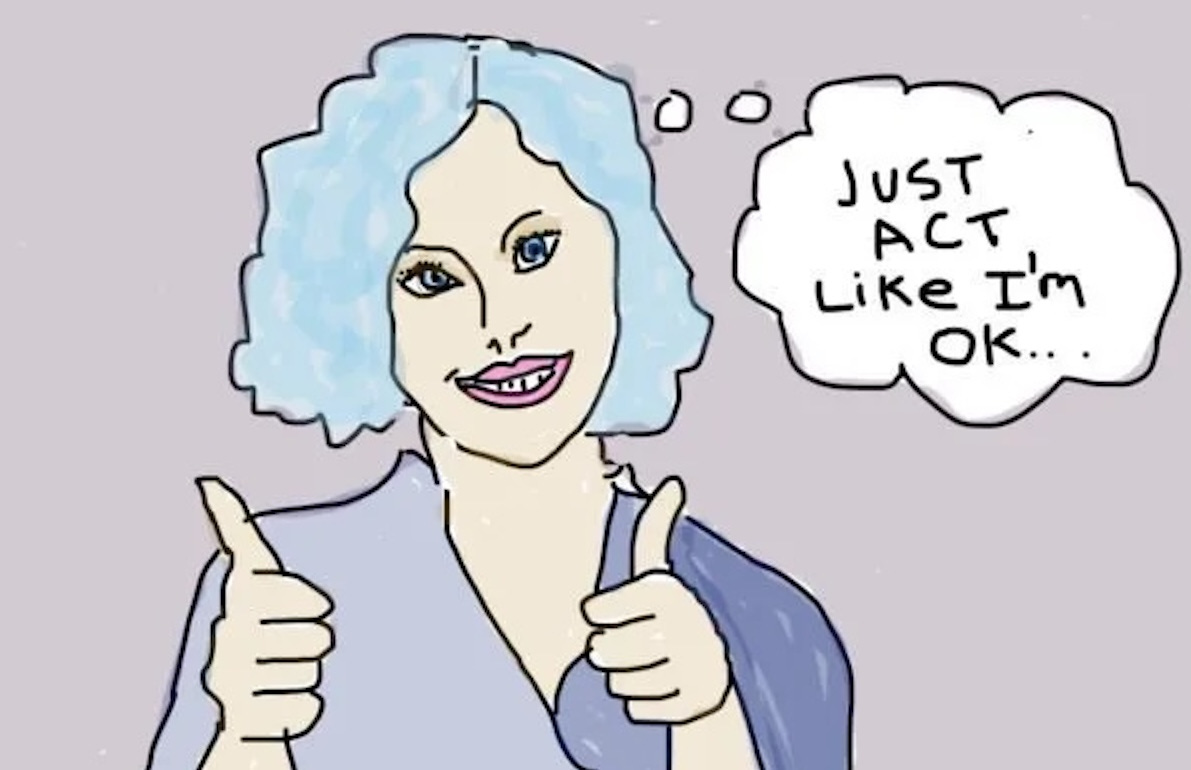
Do you laugh it off? Do you pretend it didn’t bother you because you don’t want to be “dramatic,” or because you’re afraid to lose them? Do you tell yourself, “Nobody’s perfect,” or “They’re going through a lot right now”?
If you do any of those things — and I say this with real compassion, because I have done every single one of them — you just passed their test. You showed them: I will tolerate being mistreated. You can go further.
And they will.
So now there’s a pattern. They hurt or disrespect you. You absorb it. You minimize it. Maybe you bring it up gently, and they flip it: “I was just joking, why are you so sensitive?” And now you’re the one apologizing, for being hurt! By something they did to you!
I was dating a man once, years ago. Just getting to know him, but starting to really like him. He was showering me with talk of what an amazing person I was, and I craved to hear it. Then, right as I was opening up to him, he started describing, in explicit detail, a sexual experience with an ex. And I felt shocked, and jealous, and for some strange reason I decided it would be embarrassing to let him see that I felt anything at all. So I acted breezy — “Oh, interesting!” And that was the moment I abandoned myself and showed him he could walk all over me. And boy, did he.
That is what grooming looks like. It’s like walking the plank. You can feel with every step that something is wrong, but you keep walking, because the person behind you is smiling and telling you to keep going.
Each time they push, the line moves. What was unacceptable last month happens every day now. You’ve been slowly acclimated to being treated badly.
The people who do this — some of them know exactly what they’re doing. But many are running on pure instinct. Maybe they learned in their own chaotic childhood that relationships are about power, and they’re constantly, almost unconsciously, sorting the people around them: can I control this one or not? The test is how they find out. And whether or not it’s deliberate, the effect on you is exactly the same.
Why You, and Why It Works
Here’s the part that’s hard to face.
If you grew up in a chaotic or neglectful or abusive home, you learned things that helped you survive back then but leave you vulnerable now. Here’s what’s common:
First, you learned to monitor other people’s emotions and put their needs ahead of your own. That’s a brilliant survival skill for a child who depends on unpredictable adults. But now, when someone crosses a line, your first instinct isn’t that’s not okay. It’s what did I do to cause that?
Second, you probably developed a very high pain tolerance for emotional mistreatment. Things that would send someone from a healthy home walking out the door on day one, you barely register. They didn’t hit you. They didn’t scream. They just made you feel small and confused and a little crazy. And that feels so familiar that your the part of your mind responsible for danger detection does nothing.
Third, you are deeply hungry for love and connection. And that hunger can make you hold on far too long to someone who dangles just enough warmth to keep you in place.
I’ve been there. I’ve stayed in situations where every friend I had was asking, “Anna, what are you doing?” And I couldn’t leave, because being with that person — being with anyone — activated an enormous sense of relief in me, a feeling that I was finally safe, finally home. So I’m not judging you for this. I understand it from the inside.
What You Can Actually Do
Let me give you some practical things.
First, pay attention to what happens after the good part. Watch what follows the warmth. Does it stay consistent or does it come with conditions? Does the warmth get withdrawn the moment you don’t do what they want? That shift — from free warmth to conditional warmth — is a signal.
Second, notice how you feel in your body. This is where my Daily Practice is so helpful. It’s two techniques done twice a day: first you write out your fears and resentments on paper in a specific way, then you do a short meditation — about thirty minutes each time, morning and evening. I teach it, and you can learn it for free (here’s a link to my free online course). People who do it regulaly say they develop the ability to actually notice what’s happening inside. And when someone is grooming you, your body often knows before your mind does. You’ll feel a tightness. A fog. A sense of walking on eggshells that you can’t quite explain. For me, it’s an unpleasant feeling I’d describe as “electric” in my arms. Your body is telling you: something is wrong here. Learn to listen to it.
Third, watch how they respond to a small “no.” Early in any relationship, notice what happens when you say no to something minor. “No, I can’t do Saturday.” Then watch. A healthy person says, “No problem,” and moves on. A person grooming you will push, guilt you, act wounded, or punish you with silence. That reaction tells you everything about what they’ll do with a big “no” down the road.
Fourth, talk about what’s happening with someone you trust. Grooming thrives in isolation. When something feels off, say it out loud. Because when you hear yourself say aloud, “They told me I was ridiculous for being upset that they shared my secret,” you can hear how wrong that is. Inside your own head, you can talk yourself into anything.
Fifth, be willing to lose the relationship. This is the hardest one. If you grew up neglected or abandoned, losing a relationship can feel like dying. But a relationship in which someone is grooming you is not actually a relationship. It’s a trap door in a haunted house. Run while you still can.
If you’d find it useful to have a list of the signs of romantic manipulation, I’ve made a free download for you. Keep it on your phone or in your bag, and read it before you see that person you’re not quite sure is about. Read it when your thinking is fuzzy, and you want to stay grounded.
What I Want to Leave You With
Underneath all the adaptations you made to survive, you know when something is wrong. Your intuition gets very uncomfortable when you make excuses for people who hurt you. You can feel the difference between real love and manipulation.
That knowing part has been buried under self-doubt and people-pleasing and a desperate hope that this time will be different. But it is still there. And healing is the work of clearing away the noise so you can hear your own inner voice again — so you can feel in your body when something is off, and trust it.
That is freedom. It doesn’t arrive overnight. It comes through daily action — small, concrete things that calm your nervous system, clear your thinking, and help you take sane action in your own best interest.
You are not naive for having been groomed. You were vulnerable because of your good qualities — your empathy, your loyalty, your willingness to see the best in people. Those are beautiful things. They just need to be paired with discernment. And discernment is a skill you can learn.
I’m not a doctor or therapist. I’m someone who healed from my own Childhood PTSD symptoms, and I teach people here exactly how I did it.
Wonderful article. Thank you for this. I’ve stayed in relationships for far too long and have tolerated more stuff than I should have.
The point about early boundary violations looking “small” is so important. That’s often where self-trust begins to erode—when we talk ourselves out of what our body already knows is not okay.